The $130,000 Question | A sweeping HST rebate has pushed GTA single-family home sales past their 10-year average. Condo buyers are still waiting their turn.
By Andrew Zsolt, President & Broker of Record
Royal LePage Terrequity Realty
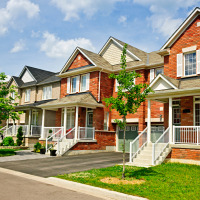
New-home construction in the Greater Toronto Area spent two years setting record lows. Then spring arrived, and detached houses, semis and townhouses started moving again. The reason is a tax rebate — and depending on what you buy and when you sign, it can be worth as much as $130,000.
What the market did
The BILD and Altus Group numbers are stark. In July, 781 single-family homes — detached, linked and semi-detached houses plus townhouses — sold across the region, up from 226 a year earlier and 50 per cent above the 10-year July average. This represents a 246% jump from the prior year. It was the fourth straight month above that benchmark, after 26 per cent in May and 36 per cent in June.
Condominium apartments, a category that also sweeps in stacked townhouses, managed 237 sales — 40 per cent better than last July, but still 80 per cent below the decade average. Total new-home sales of 1,018 sat 40 per cent under the typical July figure of 1,707.
What is actually on the table
Ontario's 13 per cent HST is two taxes in one: 5 per cent federal, 8 per cent provincial. Both can now come back to the home buyer.
For any eligible buyer, the enhanced Ontario rebate refunds the full 13 per cent on a new home worth up to $1 million — a maximum of $130,000. That cap holds steady for homes between $1 million and $1.5 million, then slides down to $24,000 by $1.85 million, which remains the floor above that. On a $700,000 townhouse, the refund is roughly $91,000. See the attached HST Rebate Chart for the rebate levels at different purchase prices.
First-time buyers have their own pair of rebates: up to $50,000 from Ottawa on the federal portion, and up to $80,000 from Queen's Park on the provincial share.
It is a rebate, not an exemption: the tax is charged, then credited back, usually by the builder at closing so the buyer does not have to front the cash.
Which properties qualify
Only housing that attracts HST: new construction, or a substantially renovated home. Resale homes are exempt, so there is nothing to refund. You can buy from a builder, hire someone to build on land you own, or buy shares in a co-op. The buyer must be an individual, and the home must be a primary residence — not an investment.
Dates matter enormously. For the broad rebate, the agreement of purchase and sale must be signed between April 1, 2026 and March 31, 2027. Construction has to begin by the end of 2028 and be substantially complete by the end of 2031. Building it yourself runs on a tighter clock: shovels in the ground during that same one-year window, finished by the end of 2029. With an assignment, both the original builder contract and the assignment itself must fall inside the window.
The first-time buyers' stream is far more generous on timing — agreements signed from March 20, 2025 through the end of 2030, with construction beginning before 2031 and finishing before 2036.
Who counts as a first-time buyer
You must be at least 18, a Canadian citizen or permanent resident, and you cannot have lived in a home that you or your spouse or common-law partner owned this year or in the four calendar years before it. You must also be the first to occupy the home, and neither of you can have claimed the rebate before.
Everyone else — move-up buyers, downsizers, returning owners — is now covered at that same $130,000 ceiling. The catch is the deadline: first-timers have until 2030, everybody else until March 31, 2027.
Do renovations count?
Sometimes, but the bar is high. The Canada Revenue Agency wants a “substantial renovation,” which in practice means a gutted interior — 90 per cent or more of the existing livable space removed or replaced. Foundations, supporting walls, roofs, floors and staircases are excluded from the count, so leaving them standing is fine. A major addition amounting to a new home counts, as does converting a barn or a storefront into a residence. A new kitchen, new bathrooms and new floors does not. Keep every invoice — owner-builders have two years from completion to file.
Why condos are still stuck
Timing is the biggest reason: a tower takes four to six years to build, so a project launching today cannot promise substantial completion by December 2031. Only one new condo project has launched in the GTA all year.
Second, condos were an investor product, and this rebate demands a primary residence.
Third, arithmetic. The benchmark new condo runs $1,054,938, up 2.5 per cent over the year, while the average resale condo trades at $636,323 — a gap a $130,000 refund cannot close. New single-family homes have gone the other way, down 8.5 per cent to $1,362,433. Subtract the rebate and a brand- new house lands close to what a used detached home costs — which is precisely why they are selling.
Builders are lobbying to loosen the construction-date rules so high-rise projects qualify. Until that changes, this remains a low-rise story.
This article is general information only. Rebate rules are detailed and fact-specific; confirm your own situation with a tax professional or a real estate lawyer before signing.


Post a comment